More Than an Athlete: Finding Identity Beyond Pain

Dr. Rita Roy: Hi everyone. I’m Dr. Rita Roy, CEO of the National Spine Health Foundation, and the host of the Get Back Toit podcast. Here we share real stories of healing and recovery from people who’ve overcome spine problems and return to the lives they love. These success stories are powerful, inspiring, and sometimes unbelievable.

Let’s dive in.

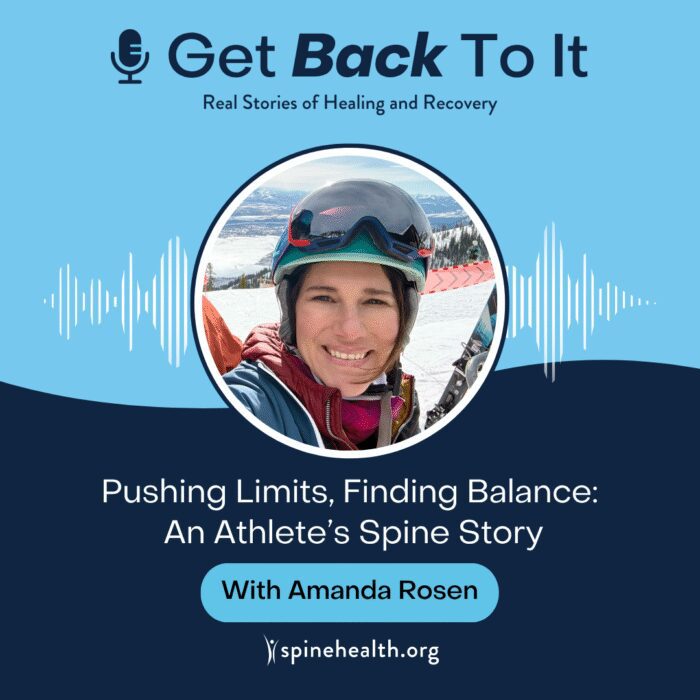
At the Give Back Toit Podcast, our mission is to share the stories of spinal champions, individuals navigating spine conditions while striving for a better quality of life. Today’s guest is Amanda Rosen. Amanda’s journey with spine issues began at just seven years old when she developed a severe limp that was later diagnosed as spondylolisthesis.

Despite living with chronic pain from a young age, Amanda remained incredibly active, eventually becoming a division one lacrosse player at Rutgers University and later competing in Ironman races. But in 2016, while training for what she hoped would be a qualifying race for Kona, everything changed. A sudden and severe progression of her condition left her unable to walk and struggling with debilitating pain.

After years of pushing through and exploring conservative treatments, Amanda ultimately underwent spinal fusion surgery. What followed was not only a physical recovery, but a transformation and how she understood resilience, identity, and life beyond pain. Her story is one of perseverance perspective and reclaiming life on her own terms.

Amanda, your story starts incredibly young. You were just seven years old when you were first diagnosed. Take us back to that time in your childhood. What do you remember about how all of this began?

Amanda Rosen: Yeah. Well first, thanks for having me. And yes, so I remember very clearly I’m, I’m walking through the hallways in elementary school and I start just dragging my leg hopping, uh, instead of walking, uh, because I had severe pain in my hips.

And so. Uh, this is completely a uncharacteristic, you know, super athletic young kid. And I go to the doctor and they think I have some hip issues and I end up in the hospital for a very long period of time and traction. And, uh, it turns out that, you know, after many, many tests I didn’t have a hip problem at all.

I had, uh, spondylolisthesis and, um, you know, was given some restrictions of what I can and can’t do. Um, I wasn’t allowed to dive, I wasn’t allowed to do gymnastics, but quite honestly, uh, that didn’t matter to me ’cause those weren’t sports I was interested in. So, uh, you know, what I heard was I could do anything I wanted to do.

And, you know, just had to manage moving forward that when I started limping I needed to rest. And, um, you know, it was, uh, just something I lived with.

Dr. Rita Roy: Yeah. That hospitalization as a, as a kid must have been pretty scary. Um, how did your family, and how did you, um, deal with that that time?

Amanda Rosen: Um, honestly, I don’t remember it as a scary time.

I remembered it kind of as a fun time, uh, because, you know, there were other kids in the hospital and we would race the wheelchairs. And, um, I remember getting all letters from kids in my class, you know, telling me to get well. And, um, you know, it, it’s sort of like when I had, you know, I have two girls and, uh, you know, they loved being wrapped up in East bandages and, you know, they wanted, I think, crutches when you’re for Christmas.

And so, you know, there was a little bit of an attention part there. And, uh, it was, uh, it, it wasn’t, it wasn’t too bad, you know, I, I, you know, kids are so resilient. Yes, I popped right back up after I was allowed to resume activity, so,

Dr. Rita Roy: yeah.

Amanda Rosen: Yeah,

Dr. Rita Roy: yeah. That, that’s, that’s, that’s good to hear. And um, the fact that you, you know, it didn’t seem like it was going to be, you know, life threatening or, or, you know, debilitating.

It was just trying to figure out where this pain was coming from, right? Or

Amanda Rosen: Yes,

Dr. Rita Roy: the limping. Um, yeah. At that time, did you understand that? This was gonna be something that would kind of come and go and that you’d have to manage it long term. Is that kind of what they had told you at the time?

Amanda Rosen: Yeah, I was given these exercises to do and every once in a while I would have to go and, uh, I had a, actually a physical therapist come to the house and work with me and, you know, I was told to do all these exercises and you know, when you’re young.

And you’re running around and you’re doing so much, and then they want you to stop and do these exercises like you’re an 80-year-old woman. You know? It is, it is not something that I, um, love to do and my mom made me do them, but, uh, you know, I, I don’t think you really understand at a young age that it’s a lifetime of, of managing that and

Dr. Rita Roy: Right.

Amanda Rosen: You know, there was probably a period of time where I forgot about it. I didn’t even think about doing those exercises and physical therapy, and I would say to my mom, oh, you know, I’m having pain again. And she’d be like, well, did you do your pelvic tilts? And I’m like, oh, that’s not gonna help me. You know,

Dr. Rita Roy: like, what does that do?

Yeah,

Amanda Rosen: yeah. Exactly. Exactly. So,

Dr. Rita Roy: yeah, and it’s, it’s, it’s remarkable that despite the diagnosis of the spondylothesis, you stayed just really incredibly active. Amanda, tell me about the different sports that you, you got involved with as a kid.

Amanda Rosen: Yeah, so I, I loved, um, baseball as a real young kid, and then I found soccer and fell in love with that.

And then, you know, I, I was introduced to lacrosse and everything else was dropped. And, you know, uh, lacrosse was my life. You know, every decision I made revolved around that sport. Um, what college I went to. What I did after college and, uh, you know, I, I luckily was able to play at Workers University and, uh, manage the pain through division one.

Uh, you know, very competitive lacrosse. Right. Um, and then post college, when team sports were, were no longer a thing for an older woman, I got into Iron Man. Um, because I always thought that that was the ultimate, I guess the ultimate thing you could put your body through. Um, I always, uh, thought so highly of those athletes and I’m like, oh, one day I’d like, I’d like to be able to do that.

And so I got into long distance training. Uh, you know, also some extreme sports like kite surfing and, and, uh, skiing, uh, telemark, uh, um, you know, uh, going, going off mountain and doing, oh my gosh. Yeah. So, so, yeah, just any, anything every 10 years I, it seemed that I picked a new sport, um, mountain biking and, yeah,

Dr. Rita Roy: and, and none of these were like easy sports.

You know, I don’t know, curling or something. These are all just like very physically demanding intense sports. I wanna go back to a second with your, um, division one Rutgers highly competitive women’s lacrosse team. That is so cool. How, how did that work for you in, in dealing with the. Spondylothesis, um, with physical therapy and training, or did it even come up at all during that period of time in your life because you’re so fit, right?

One of the most important ways to manage a spon long-term is that, you know, core strengthening those deep, um, spinal muscles, getting those conditioned and keeping that strong. So it may have been that you were in such great shape, it didn’t really affect you. I wonder.

Amanda Rosen: No, I definitely managed pain, uh, all through, um, college.

Uh, and remember it was still hip pain the way it was presenting to, to my body. And so, you know, we had a team doctor and I would go and, you know, they don’t really know what to do with you besides, um, you know. Uh, doing those exercises, which really at, at, at that level, you’re doing so many other exercises that physical therapy isn’t always a great alternative, but at, it’s at that point where I started getting injections and, um, once in a while I would get put on a steroid, uh, to manage the inflammation and.

Those drugs are amazing, but they’re also not good for you. So that was the first time with conservative treatment that I really started going for those injections. Um, and after a while those stopped working, you know, so

Dr. Rita Roy: yeah. That’s interesting. Were those mostly cortisone injections?

Amanda Rosen: Yes. Yes, exactly.

Yeah. Um, yeah.

Dr. Rita Roy: And, and where did you go? Was that an interventionalist or a pain doctor? Was it a spine practice or how did you, where did you get that care?

Amanda Rosen: Yeah. So, uh, you get, um, you go to your primary and then they refer you to a local spine doctor, and then they usually have a pain doctor in their practice.

Dr. Rita Roy: Mm-hmm.

Amanda Rosen: Yeah. And so you get those injections under fluoro in their, in their office. Um, and, uh, you know, that that worked well for me for a little while and. And honestly it was really good that I went through that because it built a history of conservative therapy. So when we talked in a little bit about, um, actually making the decision to have surgery, that’s gonna play an important role in, in, in getting that approved.

So yeah, it was an important process to go through.

Dr. Rita Roy: Right? And so throughout colleges. Four years or so through college.

Amanda Rosen: Yeah.

Dr. Rita Roy: Managing that pain with this, you know, conservative therapy, so injections, medications when needed, and just plowing. Plowing through that.

Amanda Rosen: Yeah. And there’s no rest. You know, you’re not allowed to rest.

So,

Dr. Rita Roy: yeah,

Amanda Rosen: that’s probably what I really needed,

Dr. Rita Roy: maybe, but also motion is lotion, so, right, so a body in motion stays in motion. So there’s this sort of gentle, um, place where, where you’ve got to balance when rest is needed and then when motion is, is helping to keep things moving. But certainly in an acute flare up, you do, um, wanna let that.

Settle down. So, but that’s hard to do when you’re a busy college athlete. For sure. Um, yeah. So, so college ends. You go into the world of, um, of, of Iron Man and, um, you know, into your adult life. You, you picked up all of these incredible, uh, I think you said mountain biking, skiing, kite surfing, all of these, um, kind of endurance training activities.

Tell us what that meant to you personally, and why, why were you drawn to these things and, you know, how, how did you manage those activities?

Amanda Rosen: Yeah. Yeah. Well, well first of all, I love what you were saying about, um, being in motion. I always said if you rest, you rust. So along the state, rest is rust. Yeah, yeah,

Dr. Rita Roy: yeah.

Amanda Rosen: Um, yeah. So, you know, to answer your question, like I, I always try and push myself both, you know, and, and everything I do, whether it’s work or sports or, uh, even with like personal life and kids and, you know, you, you always strive to be the best that you can. And so what I found. Was that I was doing all these long distance things.

I was doing a long distance swim and I was training on the bike for a, um, MS bike ride for charity from Boston to Cape Town. And I’m like, oh wow, I’m doing all these long distance things. I might as well do an Ironman. And I had never done as well. Yeah, I’ve never done a triathlon before, so like that’s just, you know, how my mind works.

And so, you know, just. Always trying to, um, be the best that you can. Push yourself as hard as you can and, um, you know, finding that self-satisfaction in those things that you do. So, yeah.

Dr. Rita Roy: Yeah, so it sounds like that’s just what makes you tick also on the, on the physical side. ’cause some people push themselves in work and family life, but you also pushed yourself in personal athletic, uh, pursuit and, um, that’s really awesome and inspiring.

And, um, I think I met you just on a. Low level hike, which you could lap me on, but I was just happy to be out there. But just seeing, you know, you’re even today, you know, fast forwarding today, you’re, you’re clearly, uh, you know, still, uh, very, very athletic. So, but we’ll, we’ll, we’ll, okay, we’ll get, I’m, I’m jumping ahead.

Okay. So let’s talk about, um, in 2016, what happened. You’re, you’re training for yourself. Yeah, man, let’s talk about that.

Amanda Rosen: Yeah, so, so I finished my first Iron Man and I had just wung it with my training. I wung it with my nutrition. I had no idea what I was doing, and I ended up doing really, really well. I, I came in fourth in my age group.

Dr. Rita Roy: Wow.

Amanda Rosen: And, um. I went to a roll up to, um, it, it’s this process where you can see if you are you placed to go to Kona. And so if someone had already gotten in before you and they’ve already established that they’re going, you can roll up your number and possibly go. So I went to this. Process. And I, um, didn’t get in, but I’m like, oh, I’m gonna try again.

And so I’m doing this long swim training. It’s like a five mile swim. And I decided that day to wear a wetsuit, um, on this three hour swim. And as I was starting to get out of the water, I realized I couldn’t stand up fully. I could only like lean on my knees. Or I would have severe pain in my back, uh, going down into my legs.

And I think what happened was that the wetsuit made me very buoyant in the water. And so I think I fractured my pars during that swim because I was hyper lordotic of like leaning your lower back backwards. And so to make matters worse. I was using this swim race as part of my training program, and I was biking 50 miles afterward across Long Island to Huntington, so from Bayshore to Huntington, and because it didn’t hurt when I was leaning over on the bike, it only hurt when I stood up,

Dr. Rita Roy: like

Amanda Rosen: right.

Yeah. And to make it even worse, um, we were having a family reunion in Huntington and I thought it was a great idea to take all the kids, uh, they were like young at the time and go, uh, sleep in a tent outside. Because my, my aunt’s house was so tiny, and I also thought it’d be really fun for all the cousins and the kids to, you know, be in a tent outside and camp.

And so here I am. Yeah, I’m in terrible pain. I biked 50 miles. I swam, you know, five miles. I can’t stand up. And I’m sleeping in a tent for three nights, and my body said, kids, yeah, my, my body said no more like this is it. And I, I stopped training. I didn’t get, I pulled outta the race, so yeah.

Dr. Rita Roy: Wow. That’s, you say it was a smile on your face.

That must have been a big deal.

Amanda Rosen: It was a big deal. It was a really big deal. And what was really the defining moment was when after that I went home and the kids wanted to go to, um, I think we were going to the Native American Museum, uh, in Mohegan Sun or near Mohegan Sun. Uh, I had to have the kids get me a wheelchair and push me around because I couldn’t walk for more than 10 minutes on my own.

So I went from being this Ironman athlete in the best shape of my life to not being able to do the dishes or walk for five minutes.

Dr. Rita Roy: Oh my gosh, my, I, I like jaw drop moment, like, oh my gosh. Wow. I mean, I mean, I’m, I’m can’t even imagine. I’m looking at, you know, vibrant. You know, active, healthy, beautiful, Amanda.

Um, this was 10 years ago, so even younger, vibrant, beautiful Amanda, like in a wheelchair. I can’t even imagine. I thought that. I can’t visualize that. Um, wow. Was it Amanda? Was it the pain from walking? Was it numbness? Was it, what were the, what was it? Was it really just the pain?

Amanda Rosen: Yeah, so, so there’s back pain, there’s radicular pain when that pain goes down your legs.

I was having electric shocks down my legs, uh, twisting. So like if I was at the sink and doing dishes and then leaning to load the dishwasher, you know, that would send me over the edge. Um, and what I found at that point then was that I was really difficult to be around. Like I was cranky. I was mean, I was, um, not happy.

I was not joyful. I, you know, I’m sure it was really tough for my husband to be around me at the time. Uh, it was, it was that pain was changing who I was.

Dr. Rita Roy: And when you had this moment happen in 2016, you just abruptly stopped your, your physical activity in that moment?

Amanda Rosen: Yeah. Yeah. Yeah, I could, I, I couldn’t do anything else.

Yeah.

Dr. Rita Roy: So what, what did you think, what did you think you were gonna need to do next? I mean, as a person who had spent a lifetime with very high level activity and exercise, and that movement to suddenly stop doing that is, um, it’s just, it’s, it’s, it’s physically a change for your body, but it’s emotionally, um, a huge change for you.

Yeah. Yeah.

Amanda Rosen: Yeah. So in 2008, I, uh, my dau, my second daughter was born and she was born with transposition of the great vessels, and she needed to have open heart surgery, uh, when she was four days old. And it was a horrible, traumatic experience to go through. But what it taught me was how lucky are we when we have a major problem and it’s fixable.

Yes, we, at the end of the day, I took home a healthy baby girl and I felt that same way about my problem. As you know, yes, I’m in deep pain, and surgery was never an option for me because I always thought it was less resort and I was at the point where it was less resort and I felt comforted knowing that my problem was fixable.

I did not have to live with this for the rest of my life.

Dr. Rita Roy: Yeah.

Amanda Rosen: Yeah,

Dr. Rita Roy: yeah. That’s amazing. Thank you for sharing that personal and beautiful story about your family life, but it really gives you that perspective, the miracles of modern medicine,

Amanda Rosen: right? Yeah. It’s amazing. It’s amazing

Dr. Rita Roy: and, and it’s amazing.

And Amanda, at that time, were you working in healthcare?

Amanda Rosen: Yes. So I spent, um, you know, from, oh gosh, I don’t know when I was 23, uh, to the present time in the medical device industry, um, actually working in spine, so selling the products, uh, for fusions. So the bone grafting products, the, the screws, the rods.

So, you know, as a patient coming into this. Uh, scenario where, you know, I was always in the room, uh, selling the medical devices and now, you know, a patient gets wheeled into the room and I know everything that’s happening to that patient during the surgery. Um, you know, what instruments are used, what order they’re being used in, um, what the setup is.

I knew nothing after they were wheeled outta that room, and that was a really scary place to be in. Yeah.

Dr. Rita Roy: Yeah. So, but that, uh, knowledge in this acute setting, you know, in 2016, that knowledge, you had this unique knowledge that there are opportunities to fix this.

Amanda Rosen: Yes, yes.

Dr. Rita Roy: And, and I know that that exists, right?

Yeah. And, but oh my gosh, now I’m gonna be one of those people. Yeah. That is on the receiving end.

Amanda Rosen: Yeah.

Dr. Rita Roy: So what were your next steps in getting your diagnosis then?

Amanda Rosen: Yeah, so, um. F first going to the doctor and getting scans right. I knew something was terribly wrong and, and as I mentioned earlier, it was a good thing I went through all that conservative treatment because I had a baseline.

I knew that my grade one s Bondi was now a grade two ponty. I know that now, you know, I had severe foraminal stenosis where 10 years ago I didn’t. Um, I knew that my pars were fractured bilaterally where they weren’t before. So having those baselines to compare how your, uh, um, you know that you’re getting worse.

Yeah, the

Dr. Rita Roy: progression.

Amanda Rosen: Yeah, the progression. And so mentally, when I made that decision to finally do something about it, it was absolutely devastating to have my insurance company deny the surgery.

Dr. Rita Roy: What, and

Amanda Rosen: yes, they denied it and I think I spent. Just days where I, I wasn’t even crying. I just had tears running down my face because when you finally make that decision that you’re ready mentally, um.

I couldn’t, I couldn’t take it one more day.

Dr. Rita Roy: Yeah.

Amanda Rosen: So I, I, I went through the process. I wrote appeals myself. It ended up getting approved. Wow. Eventually, but, um, you know, I had to, um, I had to write those appeals myself. Yeah. Oh my

Dr. Rita Roy: gosh.

Amanda Rosen: Which was awful. Awful. I don’t wish that on anybody.

Dr. Rita Roy: And Amanda, how did you choose, uh, a surgeon to go to?

Was it someone that you knew that you had worked with? Is that how you

Amanda Rosen: Yeah. I had worked with them professionally. I knew the products that they used and the instruments, and I knew the hospital and the staff, and so I really trusted them.

Dr. Rita Roy: Yeah.

Amanda Rosen: Yeah.

Dr. Rita Roy: And even with that, you still got denied.

Amanda Rosen: Yeah.

Dr. Rita Roy: Is it because the, the insurance wanted you to prove, um.

Conservative care prior to the surgery? Was it that sort of pathway denial?

Amanda Rosen: Yeah, so, you know, I don’t really know how insurance companies work if they, I, I hear rumors that they just deny everything and then you have to appeal. So maybe that was what happened, but, um, I certainly had proven, um, years and years of conservative treatment, um, where it shouldn’t have been denied.

So, um, yeah, it’s unfortunate.

Dr. Rita Roy: That’s so hard. Um, just, you know, the, the thing that compounds that situation is that not only are you having to struggle through the denial process, but you’re in pain

Amanda Rosen: Yeah.

Dr. Rita Roy: While you’re going through this. Right. You are, you are in a, probably one of the most vulnerable states of your life, and now you’ve got to have the wherewithal to fight this, this fight.

Yeah. Wow, that’s, that’s amazing that you did that. Um,

Amanda Rosen: yeah, so

Dr. Rita Roy: it’s,

Amanda Rosen: yeah. Not only fighting with the insurance company, but then it’s also doing all the research of like, alright, what, what happens on day one after surgery? Or, or, or day zero when I wake up, am I gonna be in pain? What is, what, what am I gonna be allowed to do?

What am I not allowed to do? What, how do I prepare? You know, all those things. I didn’t know where I, I knew, like I had dinner with my surgeon. I knew exactly what instruments were gonna be used. I knew exactly where he was gonna put the bone graft and how, and I had no idea. When I woke up, what was gonna happen.

So that was like, just super scary, uh, all that unknown. Yeah. And, and there was nothing online. Like I would Google it and something would come up for a total need, like. There was nothing online. Yeah,

Dr. Rita Roy: I know. And this is where, you know, I just feel like I resonate with you so much, Amanda, because I’m a general surgeon by training and know a lot about, you know, surgery and procedures and, you know, the operating room.

And um, and then it came time for me to have a fusion. And I knew nothing about what was gonna happen to me.

Amanda Rosen: Yeah,

Dr. Rita Roy: and I didn’t even know about, you know, the, the proceed. I had an a lift, but, you know, I just didn’t even know what was Yeah. You know, I, I knew nothing about spine and how far spine had come. So, you know, at, at least you sort of, you knew like what was gonna happen in the operating room to you, but around that, like, what should I do to prepare?

What, what should I expect that when I wake up and the next day and the next two weeks and the next six weeks? Yes. And right. Yes. And how do I get through that? Right. Yeah. That’s, that’s what we’re here to do. That’s what we’re here to do.

Amanda Rosen: Yep. Yep. That patients need resources, uh, specific to their procedure.

And then, uh, you know, I’m, I’m so happy to be here talking with you because it, it brings light to that, that need.

Dr. Rita Roy: Yes. Thank you Amanda. Um, that is what we are here to do and I’m so thrilled to have you here sharing your story. And I think your story is so fascinating on, on so many counts going from being this, you know, sort of top level, um, athlete, um, managing back con a pretty serious back condition, and then ultimately, you know, having that progress to a point of requiring surgery, but knowing, having the.

Industry insight to know that that’s going to, that’s gonna get you back to something, but what does that journey look like? Right? And like I, I, you know, needing more information and, and needing the support to, to get there. So it’s, it’s a really, really interesting, um, uh, journey and I’m so grateful that, that we’re talking about this today.

You know, I, you had talked about, um, you know, the 2016 moment, you know, camping moment and the decision to quit completely, the training for Kona. How long did it take you to get your diagnosis and to make the decision to have surgery from that moment when you knew something was wrong? Something had to change.

What was that time period? Yeah.

Amanda Rosen: Yeah. So it was rather short, um, because I was so debilitated right away. I, you know, probably the day I got home, I called and got an appointment. They got me in right away. I was able to get an MRI right away, and then, you know, because I know how to read the report, you know, I, I prob I’ve read what the, the Radia radiologist had, you know, before I met with the surgeon.

So I went into that appointment going, oh boy, we got a problem here. And I already knew like the name of the procedure I would want and uh, you know, so that was probably. Two and a half weeks between being like super, uh, in pain and knowing I had a problem to actually seeing the radiographic evidence that supported the, the, the diagnosis.

Yeah. So, um, and then after that it was, you know, I got on the surgical schedule right away. Right away. Yeah. But that surgery got denied, so there was an extra three weeks of pain that was unnecessary because of the insurance companies. So that was, that was the hardest part because, you know, you mentally are prepared for that surgical date.

You’re getting ready emotionally, you’re getting your family ready, you’re getting your house in order.

Dr. Rita Roy: Yeah.

Amanda Rosen: And then those three weeks, I, I probably didn’t get outta bed. Uh, it was. I probably could have managed those three weeks if I hadn’t mentally been prepared for the surgery already.

Dr. Rita Roy: Yeah. Maybe

Amanda Rosen: it made the pain worse.

It was weird. It, it, the mind is an amazing thing.

Dr. Rita Roy: Yeah. That’s, that’s incredible. And that, that’s, so that are the things, the, the human aspect of the journey that, um. Need to be. Needs to be told. Yeah. Needs to be shared. Yeah. Because it’s like, oh, three weeks waiting. It’s like, no, no, no. Three weeks waiting is a lifetime of misery.

Torture. You are living tortured. You’re tortured and your whole family is being tortured. Like, what’s your surgery, mom? Mom, what day are you gonna have your surgery? And it’s just like, I don’t know. I don’t know. Like Right. The waiting is the wor it’s, it exacerbates the problem. ’cause you just don’t know when this is gonna.

Amanda Rosen: Yeah, the, the unknown of how long you’re gonna live with that pain, uh, once you have made that mental decision to take care of it, that unknown, uh, multiplies your pain.

Dr. Rita Roy: Yeah.

Amanda Rosen: Yeah.

Dr. Rita Roy: That’s so tough.

Amanda Rosen: It is. It is really tough. And that’s why like, if anybody comes to me and they ask me about my, my, um, experiences, you know, the first thing I tell them is, if you’re in pain now.

Start going to the doctor now. Get that radiographic evidence of what is wrong with you. Go and do physical therapy. Do all the things now, because when you reach that mental point where you can’t go any further, you cannot then start this process. You have to start the process now.

Dr. Rita Roy: That is such good insight, Amanda, because that’s what we, we try to tell people, don’t delay.

Don’t

Amanda Rosen: delay.

Dr. Rita Roy: Get on the wagon and start Yeah. That wheel turning, because Yeah, you don’t want, you know, and, and you just don’t know what can happen, right? I mean, bones can be fixed, nerves can’t be, and yeah, so you just don’t wanna delay the treatment. You don’t wanna run out of options because. Things got worse because you didn’t deal with it, and, and it took longer than it should have.

And, and those delays can be not only emotionally and psychologically, very traumatizing, but can also lead to long-term problems. So it’s just. Get into it, right?

Amanda Rosen: Yep. Absolutely. You know, a lot of people think, oh, if I go to a doctor, they’re gonna want to do surgery on me, and that’s not the case. Right?

They, they do also want you to have conservative therapy and, and heal without surgery. And that physical therapy could actually help you also. So, right. Um, no one should live with pain. Everything is, could be ev not everything, but I mean, a large amount of the pain we’re in can is fixable. Um, and they shouldn’t be afraid to go and start that process.

Dr. Rita Roy: Yeah. It’s like one of the things we say here in the foundation, aging is inevitable. Pain doesn’t have to be

Amanda Rosen: Yes. Yes.

Dr. Rita Roy: Right. I mean, sometimes it is, but a lot of times it doesn’t have to be. And so in those cases where it doesn’t have to be fix it, right. Yeah. Fix it. Live your best life. Yeah. Yeah, yeah, yeah.

For sure. So, Amanda, the day came, you had surgery. Yes. Tell us what that was like.

Amanda Rosen: Um, I have to admit, I woke up and I was, uh, I had no more pain in my legs, but I had pain, believe me. It was not, it was, I didn’t wake up, you know, skipping and jumping. It was, it was, um. Humbling, you know, and, um, you have to ask for help.

And I had to ask for more pain medication, which is also in this day and age with opioid addiction is scary.

Dr. Rita Roy: Yep.

Amanda Rosen: And, um, you know, everybody’s pain tolerance is a little bit different, so. Yeah, it was, it was a journey of recovery. I was very thankful my mom came up to take care of my kids and help me. And she had scoliosis as a kid, so she knew, um, you know, what to expect.

And, and she, she actually was very helpful in tips and tricks. So one of the things she told me to do was, you know, put silk. Put silk sheets on your bed and we’ll wear silk pajamas so you could slide easy in and out of bed. And I would, you know, I’m a flannel girl, so, you know, I, I would’ve had trouble getting in and out.

So she, she was very, very helpful for me. She bought me a grabber so I could like, pick things up. The grab the

Dr. Rita Roy: grabber was so life changing. Yeah.

Amanda Rosen: Yeah. Um, so family support was really, really important. Um, ’cause it was those little things of, you know, taking care of your family day to day that I I I needed a break from so I could heal.

Yeah,

Dr. Rita Roy: yeah. Yeah. And I think having support as you’re healing Yes. Is so critical. Whether it’s friends, family, especially if you’re a mom and you’ve got young kids, like, how are you gonna, you, you gotta have, you gotta have your tribe, whatever that looks like. Um,

Amanda Rosen: a hundred percent. You need, you need support.

It takes a village.

Dr. Rita Roy: Yeah. Sure. So how did recovery go then?

Amanda Rosen: Uh, recovery went really, really well. I, um, you know, I was still, uh, strength training, you know, uh, but very, very cautious in how I was moving. And, you know, because I am so active, I wanted radiographic evidence of fusion before I, um. Was allowed to mountain bike again and do all the, the sports I wanted.

And

Dr. Rita Roy: yeah.

Amanda Rosen: And so, uh, about three months into my recovery, there was a race, uh, a running race. And I was gonna do it because it was a, uh, a good event. What? Yeah. And well, I was gonna walk, I, I was gonna go and just walk and participate and, you know, I, I would’ve been happy with just walking and there, you know.

There’s something about me that’s probably a little off that when I crossed the starting line, my body without even like a pre, uh, a pre-thought about running it, I was absolutely gonna walk it. But when I crossed that starting line, my body just started running and, um, it was the slowest race I’ve ever ran in my life.

And I was the most proud that I’ve ever been in my life. And I just was crying when I stopped because I was able to do it and. Knowing that I couldn’t do it before made being able to do something like that even more, um, meaningful. So yeah, that was the start of really my journey, getting back into athletics and, um, being active.

And, you know, after that my, you know, my surgeon, he wasn’t particularly happy that I, I did that. But then we got, you know, a couple of weeks later, we got the radiographic evidence that I had. Bone, bridging bone, and I had the green light to do whatever I wanted.

Dr. Rita Roy: Wow.

Amanda Rosen: Yeah.

Dr. Rita Roy: So Amanda, that is a spinal champion story.

Amanda Rosen: Yeah. In

Dr. Rita Roy: fact, we, we do the, we’ve got your back race, it’s a 5K and it’s to celebrate spinal champions, walk it, run it, you know, whatever. Um, but that is, that is the picture of what we talk about here.

Amanda Rosen: Yeah.

Dr. Rita Roy: Um. Three months. Three. Three months. So that’s 12 weeks after your surgery.

Amanda Rosen: Yeah. Yeah.

Dr. Rita Roy: Yikes.

Amanda Rosen: Yeah, I know it was a little, it was probably a little too soon, probably not recommended, but like, it was just circumstance and I felt good and, and I always say use, you know, let pain be your guide.

Your

Dr. Rita Roy: guide. Yeah.

Amanda Rosen: And so, um, it didn’t hurt and so I kept going.

Dr. Rita Roy: I think for you being in such great shape. Pre-op, right? Like for a lifetime of being in good shape, probably put you into a different category than the rest of us might have been trying to do something like that at 12 weeks. But you know, they do say it, what, what?

It’s six to eight weeks for the fusion to really, you know, take and. And then, and then you wanna build up your strength, but you had your strength built and you, you know that. Yeah. So, you know, so we probably need to do some, some evidence development around when that time point is for return to, um, you know, competition or what have you.

And that is something that. We aspire to do in the foundation is to really study that because Yeah, it’s different for everybody, right? I mean, it’s,

Amanda Rosen: yep.

Dr. Rita Roy: It’s different.

Amanda Rosen: Everybody, uh, everybody’s body is different. How we grow bone is different and, and there’s honestly different products that are out on the market that, um, grow, work faster.

Right. Speed to fusion is huge. Mm-hmm. Yeah. And as someone that wants to return to sport as soon as possible. You know, those are conversations I would have with any doctor of, you know, okay, you can use whatever you want in surgery, but what’s gonna get me back to my activity the fastest?

Dr. Rita Roy: Right. Right. And now of course there’s, um, the enhanced recovery after surgery protocols and mm-hmm.

You know, lots, lots has happened in the, in the last 10 years and new products that, you know, can make fusion happen faster and, you know, all kinds of things to get us back to life. Faster. Right, exactly. And so the down, that’s

Amanda Rosen: what it’s about. Yeah.

Dr. Rita Roy: Yeah, yeah. Yeah. Super exciting. Gosh, that is just absolutely amazing.

Um, so Amanda, where are you now? Um, so how many years out from your surgery and what are you doing now? What does it look like?

Amanda Rosen: Yeah, I mean, I’m, I’m 10 years out. Um, I have the green light to do any activity I want. I have zero pain. Um, I have not returned back to Iron Man training, but that’s more of a decision based on, uh, busy teenagers and college Yeah.

And, and all of that. But, um, you know, my husband and I, uh, we’re still extremely active or, uh, and I now stay in shape so that when we go on vacation, we could do all the things. So, uh, you know, we went to Iceland to go mountain biking and

Dr. Rita Roy: Nice,

Amanda Rosen: uh, we’re, you know, go up to Vermont all the time to go biking and, um, so, so now it’s really just enjoying, uh, every aspect of life with my family and, and, uh, you know.

Making sure that there’s, you know, no restrictions. Right. And, and maintaining that pain-free, pain-free existence. So,

Dr. Rita Roy: yeah. And so, um, now that you’ve had the fusion and you’re a little bit older, uh, at the L five S one level where you are close to the SI joint, are there exercises that you learned as a child that you are doing now as an adult?

Amanda Rosen: No, I. I, I don’t, but I do think, you know, just because I, I. Know so much about the human body now, and I would recommend everybody stretching and everybody doing weight training just for longevity. And, and, uh, so your, your, your body can function well into your, you know, seventies and eighties and sixties.

So, um, those are are things that I truly believe in, in doing on a everyday basis, is that strength training and that stretching.

Dr. Rita Roy: Yeah. Yeah. That, that’s awesome.

Amanda Rosen: Yeah.

Dr. Rita Roy: Um, do you have any fear or concern that you might one day need to have another surgery because you have this fused segment in your back?

Does that come up for you?

Amanda Rosen: Um, yeah, I do think about it. You know, adjacent level disease is a thing where a level above or below, uh, may get a little wonky, but, you know, that’s a, a bridge I’m gonna cross when it happens. Um, I’m not, I’m not, um. Restricting myself, because I know that might be a thing in the future, but I, I’m also not afraid of surgery.

I’m not afraid of, um, wh what’s to come. ’cause it, it is fixable pe people have it fixed every single day. Um, so right now, while I’m pain-free, I’m gonna do all the things.

Dr. Rita Roy: Yes.

Amanda Rosen: And, um, you know, any, anything in life can happen.

Dr. Rita Roy: That’s right. That’s such good perspective, Amanda. I, I wholeheartedly agree with you and, um, I think to your point of, you know, maintaining flexibility and strength, that goes a very long way to keeping that spine where it needs to be, even with a fused segment on there.

Amanda Rosen: Yes. Yeah.

Dr. Rita Roy: And, and again, another thing we would love to study in, you know. Athletic and highly trained peoples to see how these fusions do with adjacent segment disease. All these things that we’d like to study here in the foundation one day. Um, but, uh,

Amanda Rosen: it could be a test subject.

Dr. Rita Roy: Yes. That would be awesome.

That would be awesome. Well, this has just been such an amazing conversation, Amanda. What, um, you know, sort of looking back as we’re wrapping up our conversation today. What do you wish more people understood about living with chronic spine issues?

Amanda Rosen: Yeah, uh, I mean, number one I guess is for the family members is, and, and for the people that are experiencing pain is give yourself a little bit of grace.

It’s okay to admit that you’re cranky and, and really understanding that it’s coming from being in pain. So give yourself a little grace. Then I think the other just piece of recommendation is to go see somebody, go see the experts. You, you shouldn’t have to live that way. You, you should be able to live your best life and modern medicine is amazing and it’s fixable, so, so don’t be afraid.

Yeah.

Dr. Rita Roy: And get a second opinion. Right? Yeah. Maybe get more than

Amanda Rosen: Absolutely.

Dr. Rita Roy: You’re not inside healthcare or not in spine even. Um, get a second opinion. A good surgeon will never be upset, offended at, at all. Uh, they will respect and admire that you’ve taken the time to do that.

Amanda Rosen: Absolutely. Absolutely. Yeah.

You, you always, always get a second opinion. Yeah.

Dr. Rita Roy: Yeah. That’s, that’s amazing. Well, great. Is there, is there anything you’d like to share with our audience as we wrap up here that we haven’t already talked about?

Amanda Rosen: Oh, gosh. Um,

Dr. Rita Roy: closing comments.

Amanda Rosen: No, I, I guess just, you know, if you are experiencing pain, um, uh, good luck to you, right?

There’s, there’s options and options are good. You know? Yeah. Go do it.

Dr. Rita Roy: Go do it. Find out what your options are.

Amanda Rosen: Yeah.

Dr. Rita Roy: And educate yourself and pick one. Yeah,

Amanda Rosen: yeah, yeah. And, uh, you know, thank you for having me to let me tell my story.

Dr. Rita Roy: Thank you, Amanda. Thank you for sharing your story with such honesty and strength today.

Your journey is such a powerful reminder that even when pain feels like it defines your life, it doesn’t have to be the end of your story. Recovery is possible and so is rediscovering who you are beyond it and getting back to your life.

At the National Spine Health Foundation, we believe deeply in providing hope through shared stories and trusted education. Millions of people live with spine related pain and it can feel isolating, but you are not alone. To hear more spinal champion stories and access Spine health resources, visit us@spinehealth.org.

Thank you for listening.

Amanda Rosen’s story is one of relentless determination, unexpected setbacks, and ultimately, transformation. Diagnosed with spondylolisthesis at just seven years old, Amanda grew up managing chronic pain—but never letting it define her. She went on to become a Division I lacrosse player at Rutgers University and later pushed her limits even further as an Ironman competitor.

But in 2016, while training for a qualifying race for Kona, everything changed. A sudden progression of her condition left her in debilitating pain—unable to walk, care for her family, or continue the active life she had always known. After exhausting conservative treatments, Amanda made the difficult decision to undergo spinal fusion surgery.

In this episode, Amanda shares her journey from lifelong athlete to patient, navigating insurance challenges, surgery, and recovery with resilience and perspective. Her story is not just about healing physically, but about redefining identity, asking for help, and finding strength beyond performance. Today, Amanda is pain-free and living life on her terms—reminding us all that recovery