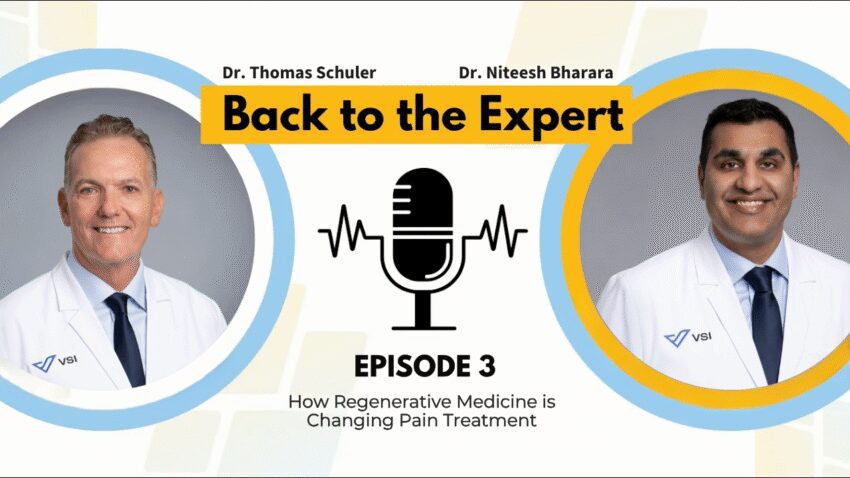

What if the future of pain treatment isn’t surgery—but helping the body heal itself? In this episode, National Spine Health Foundation Board Chairman Dr. Thomas Schuler sits down with renowned physiatrist Dr. Niteesh Bharara to explore how regenerative medicine is transforming the way chronic pain is treated.
Dr. Bharara explains the role of a physiatrist and why non-operative care is often the first step toward recovery. From activity modification and physical therapy to advanced treatments like platelet-rich plasma (PRP) and bone marrow-derived stem cell therapies, he breaks down how physicians can harness the body’s natural healing potential to address the root cause of pain rather than simply masking symptoms.
The conversation dives into the science behind regenerative medicine, including how PRP is created from a patient’s own blood and how bone marrow-derived stem cells can be used to support healing in joints, ligaments, tendons, and even spinal discs. Dr. Bharara also emphasizes the importance of mobility, flexibility, and functional movement as we age, highlighting how prevention remains one of the most powerful tools for long-term spine health.
The episode features the story of a young mother suffering from debilitating sacroiliac (SI) joint pain after pregnancy. Through a carefully targeted stem cell procedure, Dr. Bharara was able to restore stability to the joint and help her return to an active, pain-free life. Listeners will also hear Dr. Schuler’s personal experience as a regenerative medicine patient, sharing how PRP and bone marrow therapies helped him overcome chronic heel, knee, and disc-related pain without surgery.
Whether you’re struggling with chronic pain, exploring alternatives to surgery, or simply curious about the rapidly evolving field of regenerative medicine, Dr. Bharara’s message is clear: the body has an incredible capacity to heal when given the right tools and support.
Tune in to learn how today’s regenerative treatments are helping patients recover faster, stay active longer, and reclaim the quality of life they thought they had lost.