
Much like today’s modern skyscrapers are designed to withstand the pressures of time, the human body is built with its own intricate framework to last a lifetime- the spinal column. However, just as a building’s structure can be compromised by excessive weight and pressure, the spine too can suffer under extra strain, resulting in premature wear and tear, discomfort, and potential injury.
In this article, we are going to dive into the impacts of weight on spinal health and provide tips for managing weight effectively.
The Main Functions of the Spine
The spine has 3 main functions:
1) Supporting the body
While often referred to as one structure, the spine is actually made up of 33 different vertebrae, or spine bones, combined with 23 intervertebral discs that sit in between each vertebral body. Each vertebra stacks one on top of another to form the spinal column, a vertical and slightly curved structure.
2) Protecting the spinal cord
Each vertebral segment contains a portion of the long spinal canal that allows the spinal cord to span from the brain to the low back region all while being protected. The spinal cord and brain make up the main components of our nervous system. Using nerve fibers that extend out to the rest of the body, the spinal cord is the conduit that sends signals back and forth between our environment and the brain. For example, when we touch something very hot, our brain receives that temperature information and moves the body away from it instantaneously. It also allows us to control our movements.
3) Enabling flexibility and movement
Despite being made up of mostly bone, the spinal column also has flexible structures that allow for motion. In between two vertebrae, the spinal discs compress and decompress so we can move in many directions. We are also able to bend our bodies through small joints of the spine, called facet joints. Together, the spinal discs and joints allow for simple and complex movements.

How Does Body Weight Affect the Spine?
With its complex structure and functions, the spine is a vital part of the body. However, carrying excess weight can be detrimental to the spine over time. As a vertical structure, the lower vertebrae of the spine support the most weight. As additional weight is placed on the body, lower vertebrae experience more force.
Even small increases in body weight can dramatically raise the amount of force placed on the spine. Research shows that for every pound of body weight gained, the spine can experience up to 4 additional pounds of compressive force, depending on posture and movement. This effect is magnified during lifting, where each extra pound carried or lifted can increase spinal load by approximately 10 to 17 pounds, especially in the lower back region.
When combined with forward bending or poor posture, the force multiplies even further. Over time, this added strain contributes to disc degeneration, back pain, reduced mobility, and an increased risk of injury. Managing body weight is therefore a crucial part of maintaining spinal health and reducing long-term stress.
Here are a few additional numbers to consider:
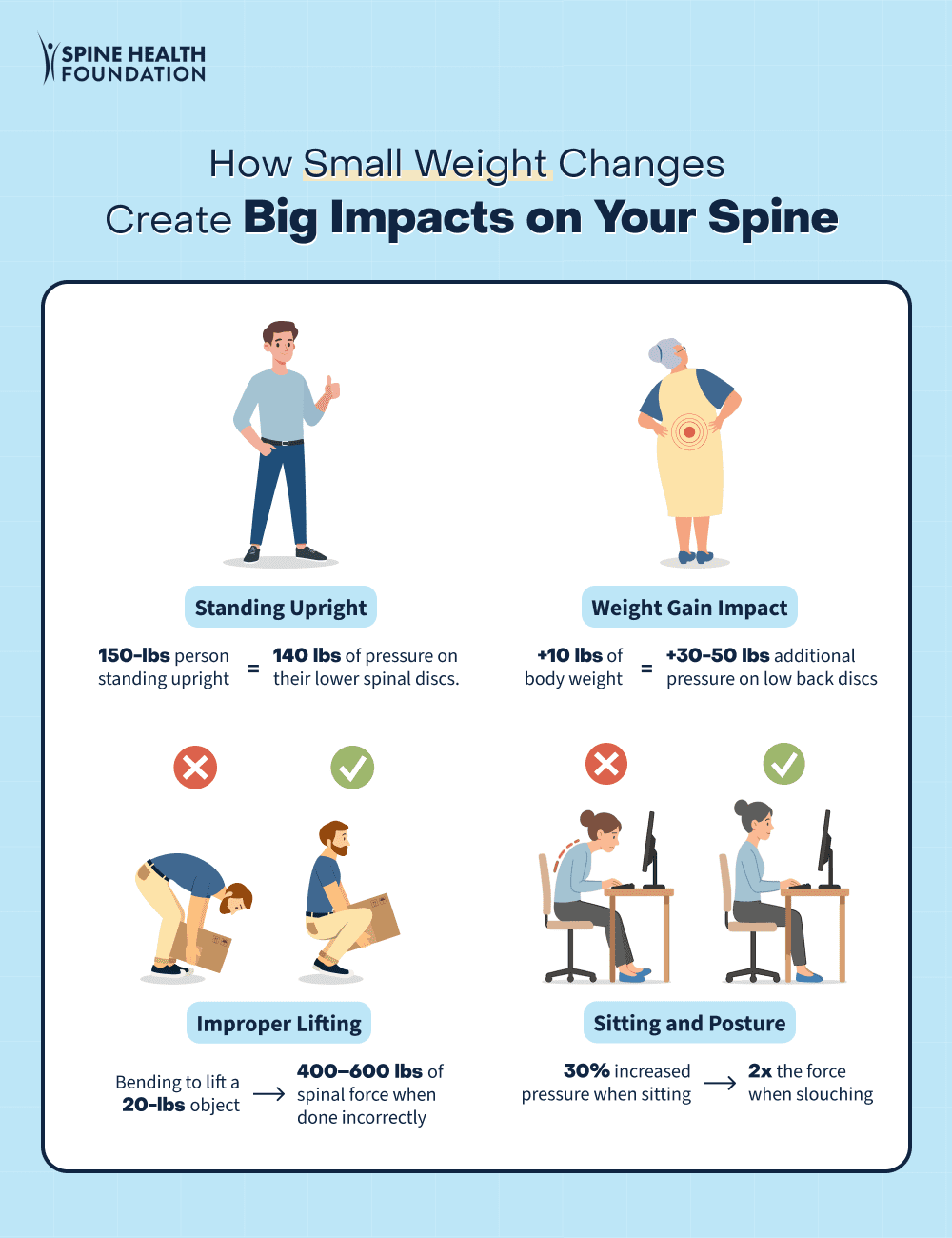
- A 150-pound person standing upright = 140 pounds of pressure on their lower spinal discs.
- An additional 10 pounds of body weight = an additional 30-50 pounds of pressure on the low back discs.
- Lifting a 20-pound object while bending forward can create 400–600 pounds of force on the spine, due to the leverage and muscle activation involved.
- Sitting increases that pressure even more—by about 30% and slouching can double the force.
According to research, extra belly fat causes the pelvis to move forward, increasing back strain and excessive inward curving of the lower back. By shifting the body’s center of gravity forward, more strain is put on discs and joints. Studies using pressure sensors and MRI scans confirm that weight gain—especially abdominal fat—are closely linked to disc problems, back pain, and long-term spine damage, affecting males greater than females in this study.
With additional weight, the intervertebral discs experience degeneration. With more force on the spine, intervertebral discs are further compressed, which can lead to faster wear and tear on these important shock absorbers. Wear and tear can lead to herniated discs (intervertebral disc displacement or rupture), spinal stenosis (pressure on spinal cord and nerves from narrowing of discs). These conditions can also impact nerve health with a greater likelihood of sciatica (extreme pain through lower back radiating to back of the legs) and nerve impingement (nerve compression leading to pain).

What are Common Conditions Linked to Excessive Weight?
The most common conditions linked to excess weight include:
- low back pain
- degenerative disc disease
- osteoarthritis
Low Back Pain is one of the most common reasons people seek medical attention. While it could be due to many causes, excess body weight is a major factor and primarily impacts back muscles, ligaments, and discs. With additional weight, the pelvis moves forward, causing back strain and increased curvature. This also causes muscle imbalances and inflammation, major contributors to low back pain. Prolonged pressure can escalate low back pain, leading to chronic pain.
Degenerative disc disease is a condition in which intervertebral discs lose compression ability and flexibility over time. This occurs when intervertebral discs lose height and cushion. Intervertebral discs are extremely important to the spine as they absorb force during activity. As discs degenerate, they lose their ability to absorb shock, leading to pain, instability, and a reduced range of motion. Excess weight can accelerate degenerative disc disease. Fat tissue concentrated around the abdomen can add pressure on discs and lead to disc herniation.
Osteoarthritis is a painful condition characterized by the breakdown of cartilage in joints and ligaments. As joints wear down, the bones in the joint can rub together, causing intense pain, stiffness, swelling, and decreased joint flexibility. Osteoarthritis can be affect the joints between vertebrae (facet joints). Excess weight affects osteoarthritis by adding pressure on these spinal joints. This added stress can wear down cartilage at a faster rate, causing pain.

How Can Weight Loss Help Your Spine?
Weight loss is a crucial way to avoid the advancement of these conditions and prevent symptoms associated with them. Most spinal conditions worsen from the increased pressure due to excessive weight and spinal structures wear out faster. Losing weight helps to decrease or resolve some of these issues. Through weight loss, the excessive pressure decreases, and intervertebral discs can function better. This helps individuals improve mobility and reduce back pain. Additionally, the body’s natural posture can be restored and reduces the risk of chronic pain. This allows for standing, walking, and sitting for long periods without discomfort.
One lesser-known impact of weight gain deals with cytokines, or inflammatory chemicals. Fat cells, especially in the abdominal region, produce cytokines. These chemicals contribute to chronic inflammation, which plays a role in pain degeneration, and development of conditions like osteoarthritis and degenerative disc disease. This can also make existing spinal conditions worse by increasing pain and joint wear. By reducing fat tissue, cytokines decrease, and inflammation levels decrease. A decrease in inflammation can reduce pain, allowing for better mobility and improved function in daily activities. This can also slow the progression of degenerative conditions in the spine.
Practical Weight Management Strategies
Changes in lifestyle can help manage weight and prevent pain. One method is to concentrate on nutrition. Research suggests anti-inflammatory diets (such as the Mediterranean diet) and reducing processed foods and added sugars helps to manage weight. The Mediterranean diet emphasizes healthy fats (like those from olive oil and nuts), lean proteins (such as fish), and plenty of fruits and vegetables, all of which have anti-inflammatory properties. Furthermore, light exercise after finishing a meal can also be a fun, implementable habit for weight loss. According to research, walking at an average pace for 30 minutes after consuming a meal has been shown to lead to more weight loss compared to the same movement an hour after a meal.
Exercise can also have a positive impact on weight management. Performing low-impact aerobic activities such as walking, swimming, and cycling can help burn calories without putting strain on the spine. Low-impact exercises also help improve cardiovascular health while minimizing joint impact, making them ideal for reducing strain on the spine. Strengthening the abdominal, back, and pelvic floor muscles help maintain proper spinal alignment and posture. Simple but effective exercises to strengthen these muscles are:
- Planks: Start in a push-up position, but rest on your forearms. Keep your body in a straight line from head to heels, engaging the core muscles. Hold for an increasing amount of time while working up to 1 minute, focusing on maintaining a neutral spine.
- Superman: Lie face down on the floor with your arms extended in front of you and legs straight. Lift your arms, chest, and legs off the ground simultaneously, as if you’re “flying” like Superman. Hold for 3-5 seconds at the top, squeezing your lower back and glutes, then slowly lower your arms and legs back down. Repeat for 10-15 reps.
- Kegels: Sit or lie down in a comfortable position. Contract your pelvic floor muscles (the muscles you use to stop the flow of urine) and hold for 5-10 seconds. Release and rest for a few seconds, then repeat for 10-15 reps. Aim to do at least 2-3 sets per day.
Proper sleep and stress management is essential to weight management. As shown in this article, poor sleep is linked to weight gain and chronic pain, especially in women. Without proper sleep the body cannot regulate hormones such as cortisol, which controls stress and inflammation. This can lead to weight gain and exacerbate pain and distress. Therefore, incorporating mind-body exercises such as yoga or mediation can benefit weight loss journeys by combining mental and physical components.
Professional support is another option for weight loss. Medical evaluations can provide detailed information on how individual bodies process nutrients or pinpoint other conditions affecting weight loss. Physical therapy can also provide customized strengthening and posture corrections relative to individual conditions. Many individuals also seek weight-loss programs which provide supervised nutrition and fitness plans. If these treatments fail, medications or a surgical consultation may be helpful to discuss with your medical provider.

Prevention and Early Intervention
Perhaps one of the most effective tools is early education, prevention, and intervention. Increased education of regular movement, posture awareness, and ergonomic workspaces and schools can help promote spine health. Especially for those with family history or sedentary jobs, promoting healthy lifestyles and early action can help prevent pain and ensure those in need seek help early.
One of the most crucial aspects of spinal health is regular movement. Especially for those with sedentary jobs, prolonged periods of sitting can place unnecessary strain on the spine. To combat this, regular movements such as stretching, walking, or light exercises keep the spine flexible and promote blood flow to muscles that support the spine.
- Movement breaks: Set an alarm every 30 minutes to stand up and stretch or walk for 2-5 minutes
- Micro exercises: Small, simple stretches, like neck rotations, shoulder shrugs, or side bends, can help counteract the effects of sitting
- Active commuting: Walking or cycling instead of driving or taking the bus can incorporate more movement into daily routines.
Posture awareness is also key to preventing misalignments in the spine, strain on muscles, and pain. Promoting awareness and teaching proper posture in workplaces, schools, and homes is essential. Furthermore, including ergonomically designed furniture, chairs and desks that support natural spine alignment can prevent slouching and reduce strain. With more and more technology being incorporated into homes and classrooms, computer alignment is also important. For desks and chairs, feet should rest flat on the ground when seated. For computers, the top of the computer screen should be at eye level and the keyboard and mouse should be positioned to maintain shoulder alignment and support the wrist. Adjustable desks are also a good option to balance between standing and sitting positions.
Promoting regular movement, posture, nutrition, and healthy daily habits are key to improving spinal health. By prioritizing spinal health, your spine will maintain its function throughout your lifetime. Identifying abnormalities and seeking help can also catch spinal conditions early and prevent complications.

Conclusion
Managing weight is a key component of spine health. Whether it is nutrition, exercise, or proper sleep, even small steps can lead to big improvements in spinal health. If you or someone you know is suffering from spinal pain, talk to a spine specialist, physical therapist, or nutritionist to create a personalized plan. With these positive actions, you can start moving towards a healthier and happier lifestyle.