

SMART for TEAM Webinars
This is the 4-part webinar series of the Spine Health Foundation (SHF) Spine and Musculoskeletal Actionable Resources and Tools (SMART) for Transforming Episode Accountability Model (TEAM) Webinar Series for Health Care Professionals and Institutions.
Given the predominance of orthopaedic and spine procedures in TEAM (and mandatory participation by more than 700 institutions as of January 2026), this webinar series will educate the orthopaedic, spine, and bone health fields on the model and how to implement.
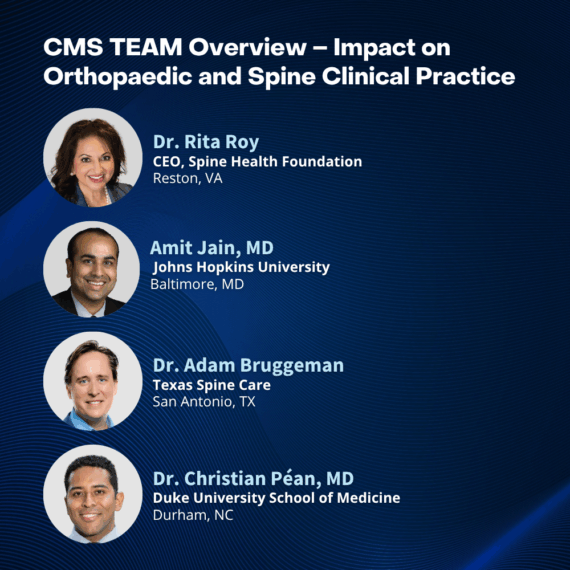
Session 1: Transforming Episode Accountability Model (TEAM) Impact on Orthopaedic and Spine Clinical Practice
Date: Tuesday, October 28 | 8-9 PM ET
This first session of the SMART TEAM webinar series will provide a high-level, executive overview of the CMS TEAM model. We’ll break down the core components of the model, discuss its financial and clinical implications, and highlight the urgent need for mandatory sites to develop robust care coordination, bone health optimization protocols, and coordination with primary care.
Participants will learn how to most efficiently diagnose patients for osteoporosis as a crucial first step in a patient’s pre-operative assessment to maximize performance under the new model. The session will also feature real-world insights from expert speakers with first-hand experience in pre-operative bone health optimization and its direct link to surgical outcomes. A clinical case review will demonstrate the tangible benefits of these protocols, both before and after surgery.
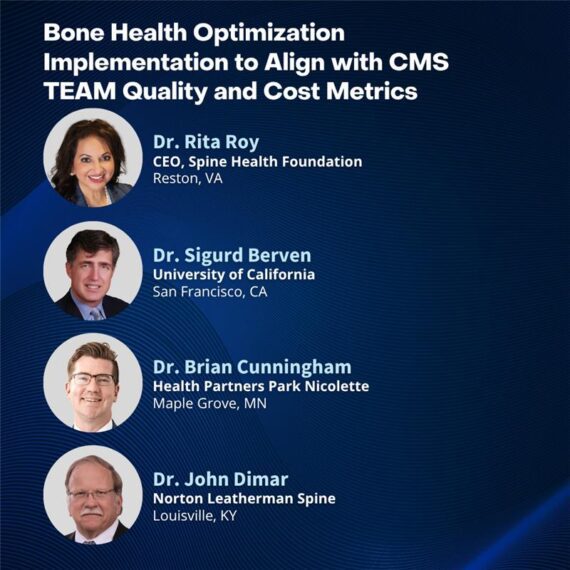
Session 2: Bone Health Optimization Implementation to Align with CMS TEAM Quality and Cost Metrics
Date: Monday, November 10 | 8-9 PM ET
This second session of the SMART TEAM webinar series will provide a deep dive into the SHF’s CMS TEAM implementation guide (a companion to the webinar series that is a practical roadmap on TEAM implementation). We will walk participants through the essential steps for establishing or enhancing a bone health optimization program at their institution; discuss how to create a streamlined patient journey, optimize site workflow, and interpret report outputs to make informed clinical decisions; and clarify the critical role of the surgeon in this process and demonstrate how a dedicated focus on bone health can directly improve TEAM quality and cost metrics, driving better patient care and financial results.
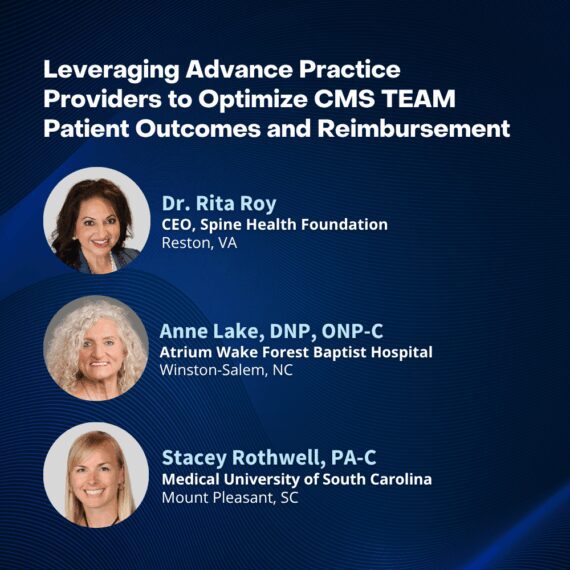
Session 3: Leveraging Advance Practice Providers to Optimize CMS TEAM Patient Outcomes and Reimbursement
Date: Wednesday, December 3 | 8-9 PM ET
View Recording
This session will detail how TEAM institutions can best leverage advance practice providers (APPs) to enhance care coordination, improve patient engagement, and manage complex cases.
Discover how empowering APPs can lead to optimized TEAM performance, maximizing both patient outcomes and financial reimbursement. This session will also provide actionable strategies for integrating APPs into your TEAM framework for a more efficient and effective care delivery system.

Session 4: CMS TEAM Implementation Guidance – Role of Health Care Professionals/C Suite
Date: Wednesday, December 10 | 8-9 PM ET
This session will provide more detailed guidance on what institutions will need to deploy to maximize patient outcomes and financial performance under CMS TEAM.
Building on the overview session, this session offers a more detailed, practical guide on the institutional capabilities needed to succeed with CMS TEAM. We’ll uncover a roadmap for deploying the necessary infrastructure to maximize both patient outcomes and financial performance. We will also hear from both leading clinicians and those in the hospital C-Suite on the structures they are putting in place to successfully participate in CMS TEAM.
Key topics will include integrating osteoporosis diagnosis and treatment into your clinical and financial workflow and leveraging that data to inform decisions that improve quality metrics and cost efficiency. This session is designed for a diverse audience, bridging the gap between clinical practice and administrative leadership.