Bone density testing is the most definitive way to diagnose osteoporosis and assess bone health. The most commonly used test is a dual-energy X-ray absorptiometry (DXA or DEXA) scan. Radiation levels are extremely minimal (far lower than a CT scan, which can also measure bone density), so you don’t have to worry about radiation exposure.
This test measures the density of your bones, typically at the hip and spine, and provides a T-score, which compares your bone density to that of a healthy young adult. The results are used to determine your bone health status.
Based on your T-score, your bone health is classified as follows:
Normal: T-score above -1.0
Osteopenia (low bone density): T-score between -1.0 and -2.5
Osteoporosis (very low bone density): T-score -2.5 or lower
These tests can provide a more accurate assessment of bone health than blood calcium levels. A person can have normal blood calcium levels but still be at risk for osteoporosis.
Why is that? Blood calcium levels are tightly regulated by the body, and the body maintains a stable calcium concentration in the blood by using calcium from the bones when necessary. So, even if your blood calcium levels are within the normal range in your lab work – which is just a snapshot of your calcium – your bones can still be losing calcium and becoming less dense, leading to osteoporosis.
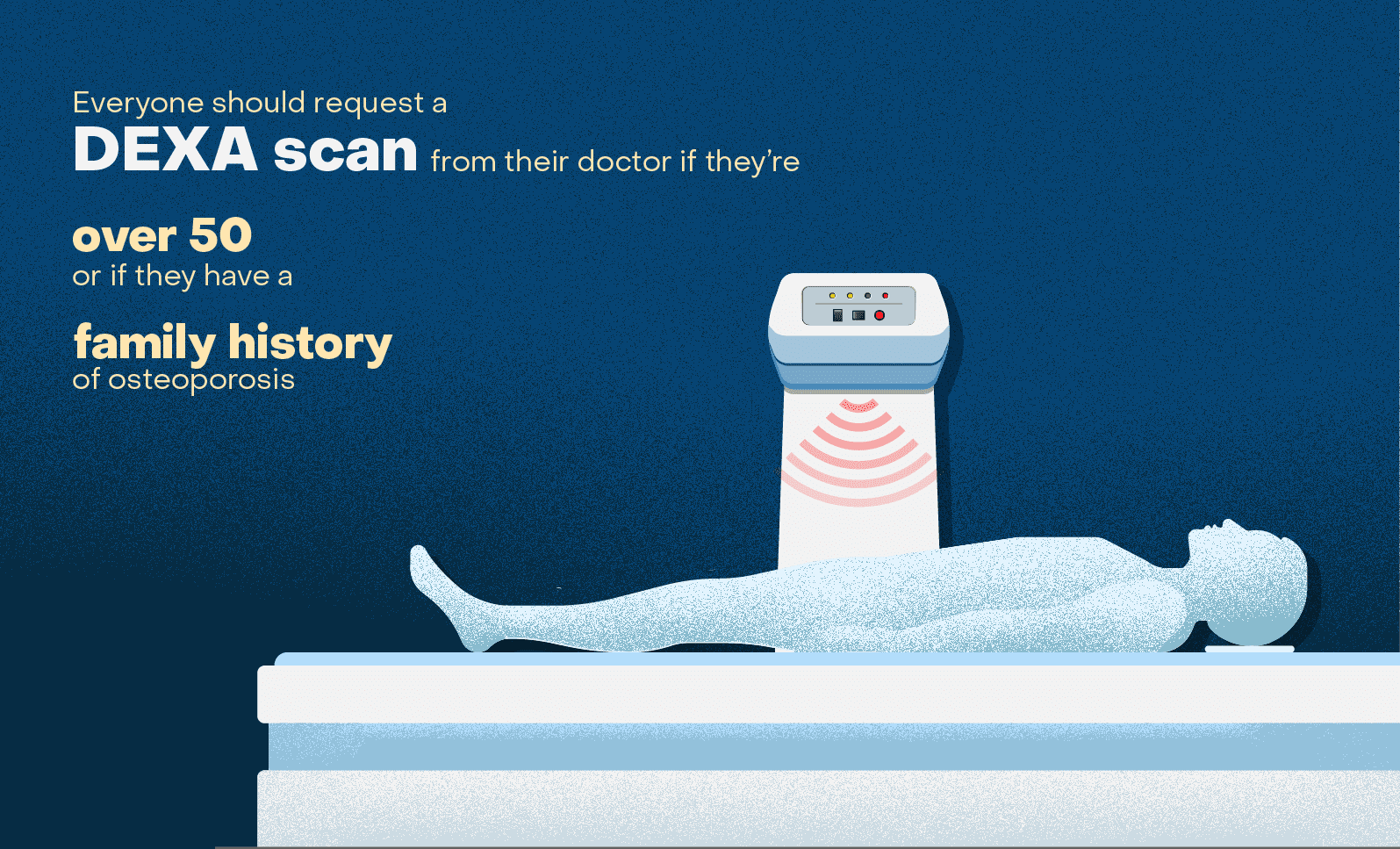
Everyone should request a DEXA scan from their doctor if they’re over 50 or if they have a family history of osteoporosis. It serves as a baseline to compare to as you age over time. Multiple data points over time are much better at revealing patterns and predicting the future than one data point in time.
In many cases, health insurance plans, including Medicare, will cover DEXA scans for the diagnosis and monitoring of osteoporosis. However, coverage can vary depending on your insurance provider, the specific plan you have, and your risk factors.
Standard X-rays are not typically used as the primary method to diagnose osteoporosis because they do not provide a direct measurement of bone density. Instead, X-rays are more useful for identifying fractures or complications related to osteoporosis rather than assessing bone density. However, X-rays can indirectly indicate the presence of osteoporosis in certain situations.
Individuals with osteoporosis may require specialized postoperative care and medications to support bone health and minimize the risk of fractures.
Disc replacement technology has advanced tremendously in the field of spine surgery and is a type of motion-preserving spine surgery that is performed in place of a fusion. This procedure is not an option for patients with osteoporosis because the weak bones are unable to properly support the motion-preserving implants.