Home / Conditions & Symptoms / Osteoporosis & the Spine / Osteoporosis in Women

In 2010, it was estimated that 67% of women age 50+ had either osteoporosis or osteopenia/low bone mass (making them more susceptible to fracture); by 2030, it is estimated this figure will rise to 80%.¹
Yet, after a fracture, only 1 out of 5 older women are tested or treated for osteoporosis.²
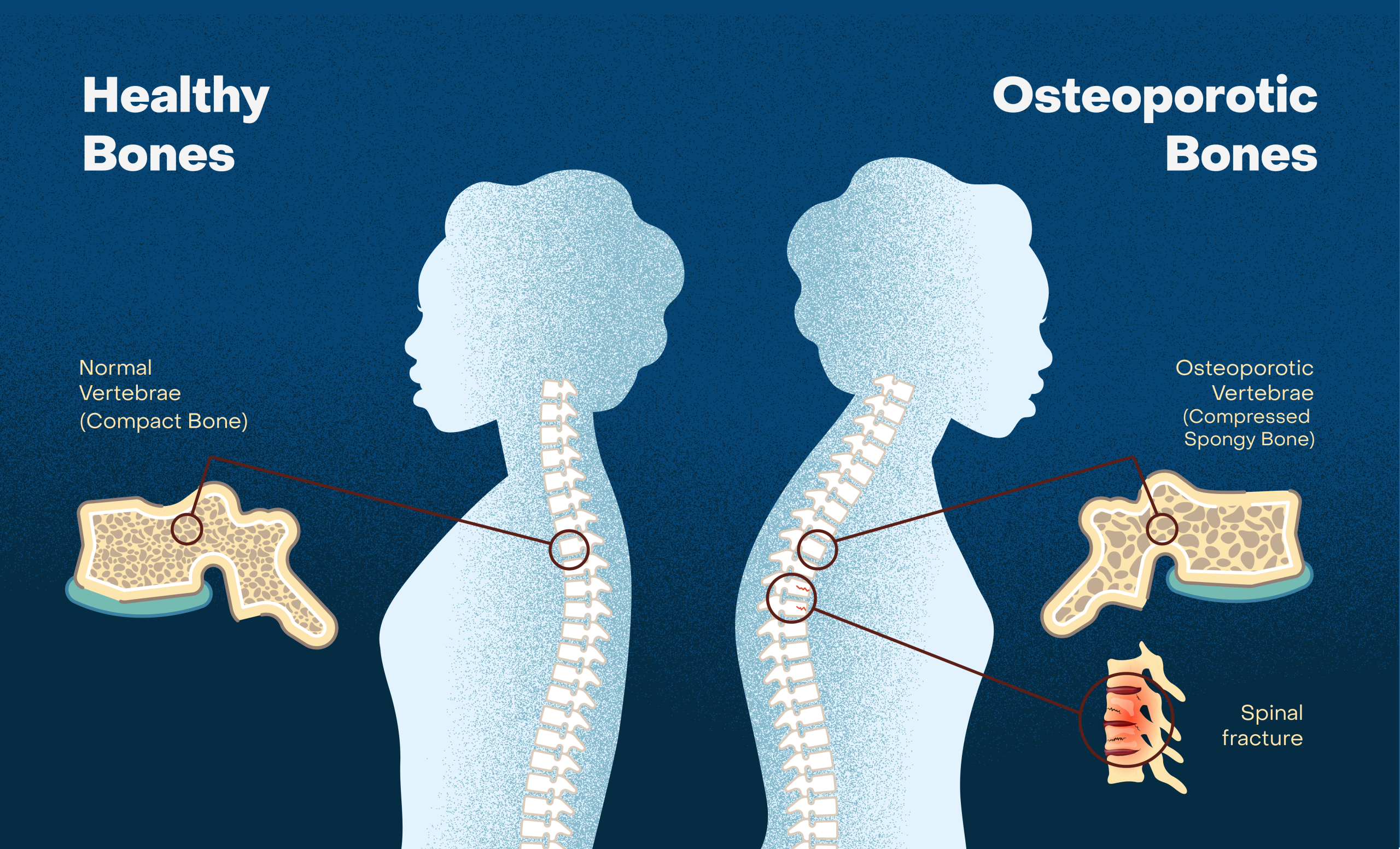
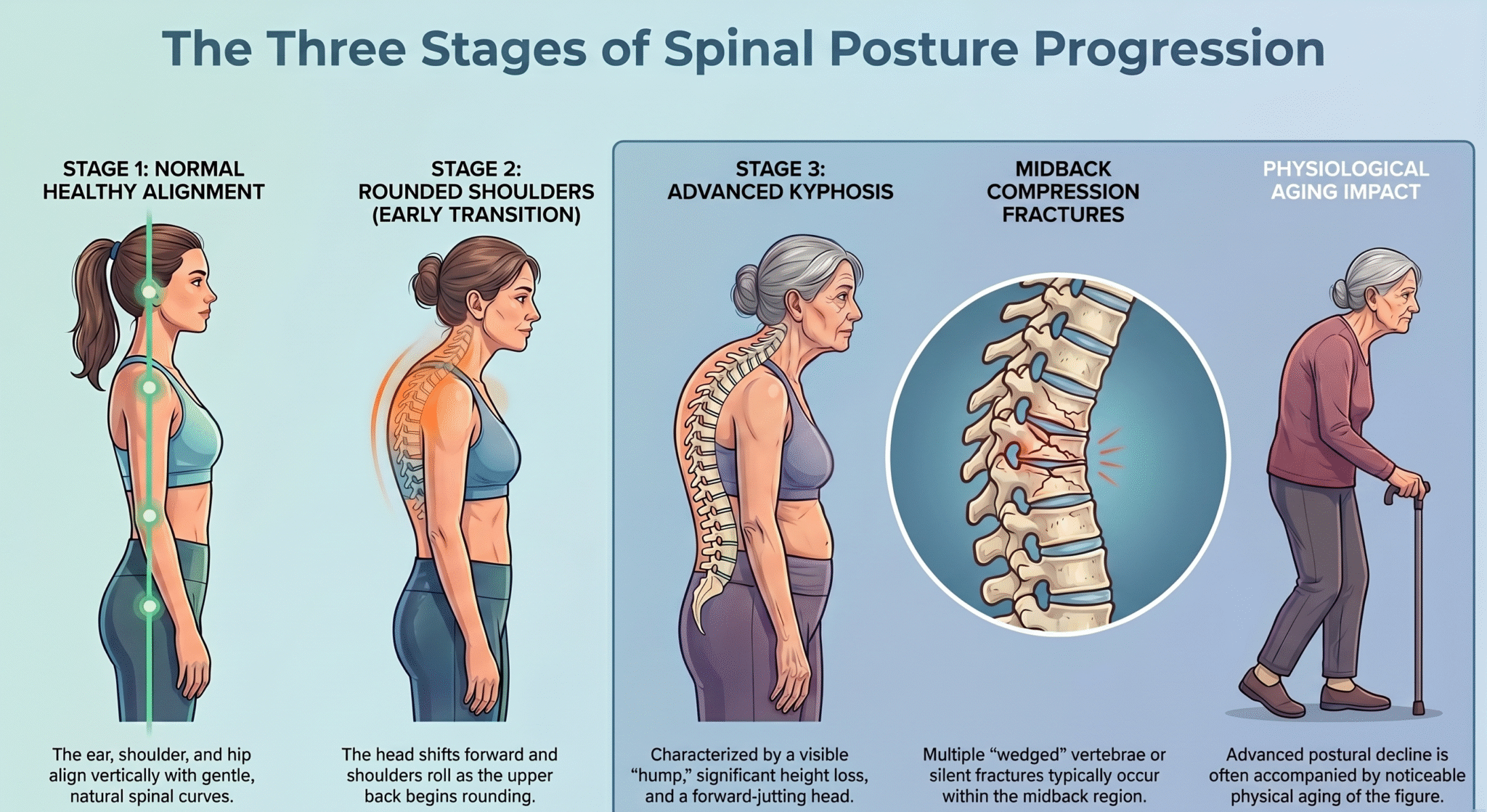
A rounded upper back is one of the most commonly missed signs of spinal bone loss. Early changes often look like simple slouching — but by the time a visible “hump” appears, silent spinal compression fractures may already have occurred.
The key detail: these changes show up from the side, not face-on in a mirror.
Quick Side-View Check:
Stand sideways to a mirror or take a side-profile photo. Then try to stand as straight as possible.
Posture habits usually improve when you consciously stand tall. Structural spinal changes from osteoporosis often do not correct, even when trying your hardest to straighten up. If the rounding stays fixed, it may be more than “bad posture.”
Early detection can help prevent additional fractures.
Strong bones are the foundation of a healthy spine. At every stage of life, the choices you make can help preserve bone strength, support healthy posture, and reduce your risk of osteoporosis and fractures. Learn what you can do today to protect your bones for the years ahead.
Sponsored by Amgen. Content developed independently by the National Spine Health Foundation.